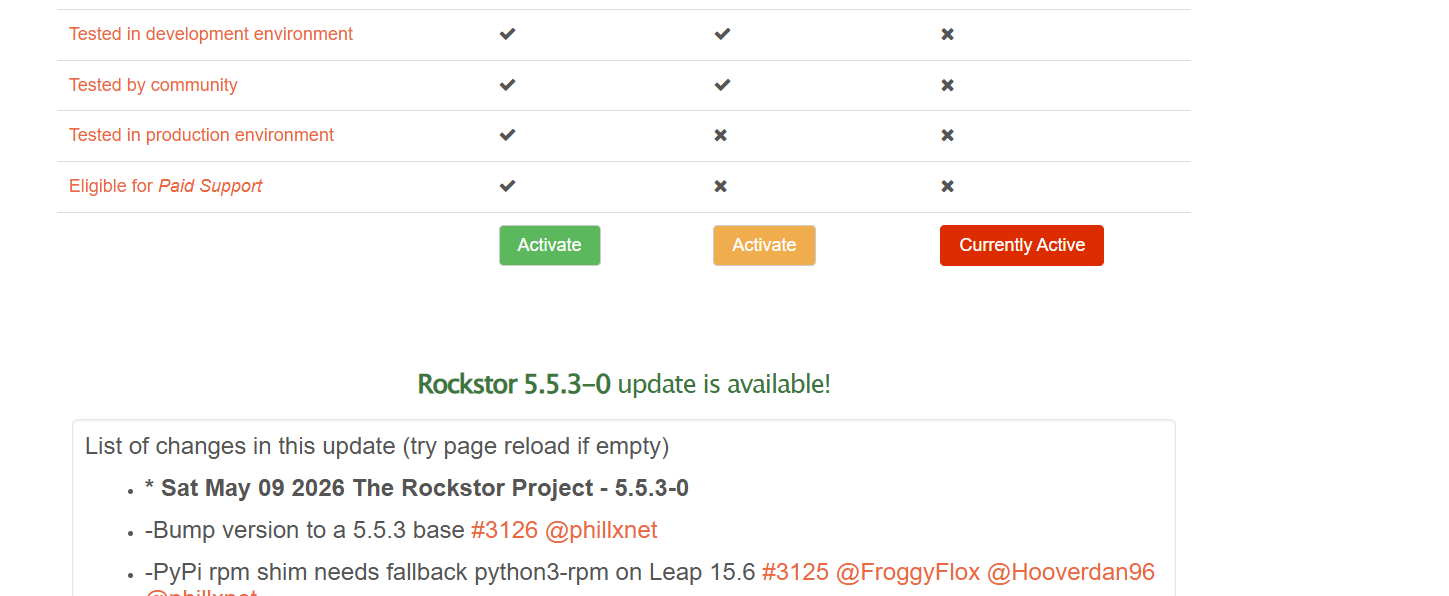
I also did not have the 5.5 update option in the gui with the 5.1 testing channel.
edit: My NAS is a very simple fileshare and tailscale home server. Theres nothing fancy going on. So i dont think i did anything out of the ordinary pripr to this?
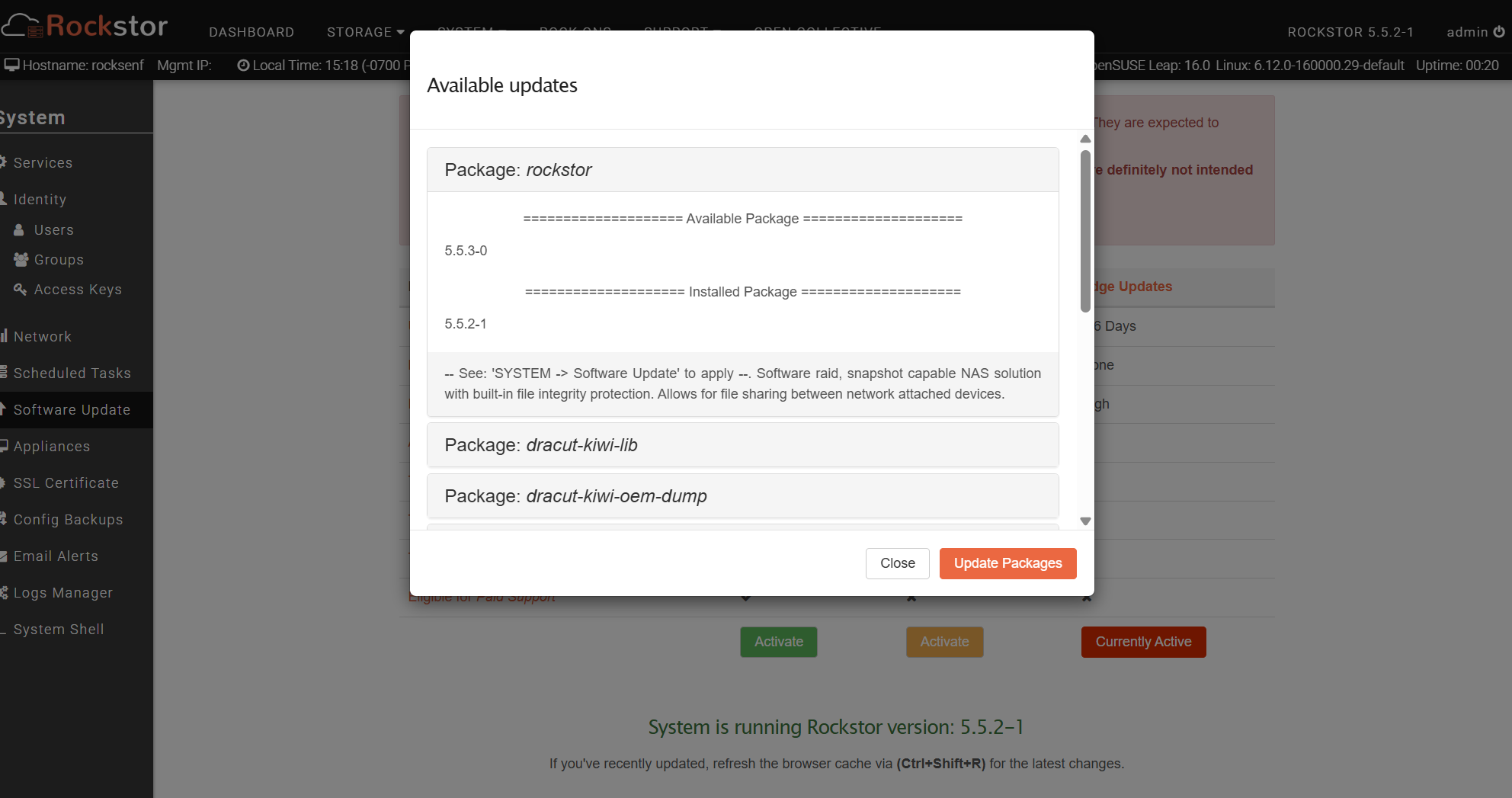
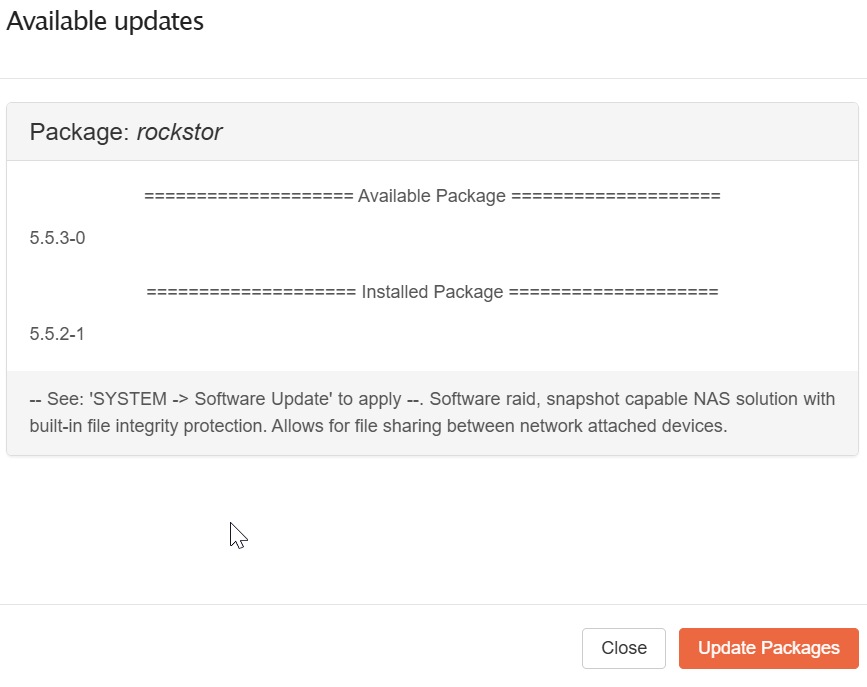
I just now sshd in and ran “zypper update rockstor”
Then saw the prompt noting postgresql dependencies. chose 1.
If it helps heres the output. Everything seems to be working now?
# zypper update rockstor
Building repository 'Update repository with updates from SUSE Linux Enterpris
Building repository 'Update repository with updates from SUSE Linux Enterpris
Building repository 'Update repository with updates from SUSE Linux Enterpris[|]
Building repository 'Update repository with updates from SUSE Linux Enterpris[/]
Building repository 'Update repository with updates from SUSE Linux Enterp[done]
Loading repository data…
Reading installed packages…
Resolving package dependencies…
Problem: 1: the to be installed rockstor-5.5.3-0.x86_64 requires ‘postgresql17-devel’, but this requirement cannot be provided
not installable providers: postgresql17-devel-17.2-150600.13.5.1.x86_64[repo-sle-update]
postgresql17-devel-17.4-150600.13.10.1.x86_64[repo-sle-update]
postgresql17-devel-17.5-150600.13.13.1.x86_64[repo-sle-update]
postgresql17-devel-17.6-150600.13.16.1.x86_64[repo-sle-update]
postgresql17-devel-17.7-150600.13.19.1.x86_64[repo-sle-update]
postgresql17-devel-17.9-150600.13.24.1.x86_64[repo-sle-update]
Solution 1: Following actions will be done:
deinstallation of postgresql13-devel-13.23-150600.14.14.1.x86_64
deinstallation of postgresql13-server-devel-13.23-150600.14.14.1.x86_64
deinstallation of postgresql13-llvmjit-devel-13.23-150600.14.14.1.x86_64
Solution 2: do not install rockstor-5.5.3-0.x86_64
Solution 3: break rockstor-5.5.3-0.x86_64 by ignoring some of its dependencies
Choose from above solutions by number or cancel [1/2/3/c/d/?] (c): 1
Resolving dependencies…
Resolving package dependencies…
The following package is going to be upgraded:
rockstor
The following 13 NEW packages are going to be installed:
lsb-release postgresql17 postgresql17-contrib postgresql17-devel
postgresql17-llvmjit postgresql17-llvmjit-devel postgresql17-server
postgresql17-server-devel python3-rpm sudo sudo-plugin-python whois
whois-bash-completion
The following 3 packages are going to be REMOVED:
postgresql13-devel postgresql13-llvmjit-devel postgresql13-server-devel
1 package to upgrade, 13 new, 3 to remove.
Package download size: 24.4 MiB
Package install size change:
| 86.5 MiB required by packages that will be installed
72.3 MiB | - 14.2 MiB released by packages that will be removed
Backend: classic_rpmtrans
Continue? [y/n/v/…? shows all options] (y): y
Retrieving: lsb-release-3.1-1.16.noarch (Leap_15_6) (1/14), 19.8 KiB
Retrieving: lsb-release-3.1-1.16.noarch.rpm --------------------------[starting]
Retrieving: lsb-release-3.1-1.16.noarch.rpm ---------------------------------
Retrieving: lsb-release-3.1-1.16.noarch.rpm …=[| (19.5 KiB/s)]
Retrieving: lsb-release-3.1-1.16.noarch.rpm …[done (19.5 KiB/s)]
Retrieving: whois-5.5.20-150600.1.4.x86_64 (Leap_15_6) (2/14), 106.9 KiB
Retrieving: whois-5.5.20-150600.1.4.x86_64.rpm -----------------------[starting]
Retrieving: whois-5.5.20-150600.1.4.x86_64.rpm ------------------------------[/]
Retrieving: whois-5.5.20-150600.1.4.x86_64.rpm …[- (106.9 KiB/s)]
Retrieving: whois-5.5.20-150600.1.4.x86_64.rpm …[done (106.9 KiB/s)]
Retrieving: whois-bash-completion-5.5.20-150600.1.4.noarch (Leap_15_6)
(3/14), 21.0 KiB
Retrieving: whois-bash-completion-5.5.20-150600.1.4.noarch.rpm -------[starting]
Retrieving: whois-bash-completion-5.5.20-150600.1.4.noarch.rpm --------------
Retrieving: whois-bash-completion-5.5.20-150600.1.4.noarch.rpm …[done]
Retrieving: postgresql17-17.9-150600.13.24.1.x86_64 (Update repository with
updates from SUSE Linux Enterprise 15)
(4/14), 2.0 MiB
Retrieving: postgresql17-17.9-150600.13.24.1.x86_64.rpm --------------[starting]
Retrieving: postgresql17-17.9-150600.13.24.1.x86_64.rpm ---------------------[|]
Retrieving: postgresql17-17.9-150600.13.24.1.x86_64.rpm …[not found]
Retrieving: postgresql17-17.9-150600.13.24.1.x86_64.rpm --------------[starting]
Retrieving: postgresql17-17.9-150600.13.24.1.x86_64.rpm ---------------------[/]
Retrieving: postgresql17-17.9-150600.13.24.1.x86_64.rpm …[not found]
Retrieving: postgresql17-17.9-150600.13.24.1.x86_64.rpm --------------[starting]
Retrieving: postgresql17-17.9-150600.13.24.1.x86_64.rpm ---------------------[-]
Retrieving: postgresql17-17.9-150600.13.24.1.x86_64.rpm ====[\ (44.4 KiB/s)]
Retrieving: postgresql17-17.9-150600.13.24.1.x86_64.rpm ==[| (397.2 KiB/s)]
Retrieving: postgresql17-17.9-150600.13.24.1.x86_64.rpm …[done (1.1 MiB/s)]
Retrieving: python3-rpm-4.14.3-150400.59.16.1.x86_64 (Update repository with
updates from SUSE Linux Enterprise 15)
(5/14), 56.2 KiB
Retrieving: python3-rpm-4.14.3-150400.59.16.1.x86_64.rpm -------------[starting]
Retrieving: python3-rpm-4.14.3-150400.59.16.1.x86_64.rpm --------------------[/]
Retrieving: python3-rpm-4.14.3-150400.59.16.1.x86_64.rpm .=[- (54.4 KiB/s)]
Retrieving: python3-rpm-4.14.3-150400.59.16.1.x86_64.rpm …[done (54.4 KiB/s)]
Retrieving: sudo-1.9.15p5-150600.3.12.1.x86_64 (Update repository with updates
from SUSE Linux Enterprise 15)
(6/14), 1.9 MiB
Retrieving: sudo-1.9.15p5-150600.3.12.1.x86_64.rpm -------------------[starting]
Retrieving: sudo-1.9.15p5-150600.3.12.1.x86_64.rpm --------------------------
Retrieving: sudo-1.9.15p5-150600.3.12.1.x86_64.rpm …[not found]
Retrieving: sudo-1.9.15p5-150600.3.12.1.x86_64.rpm -------------------[starting]
Retrieving: sudo-1.9.15p5-150600.3.12.1.x86_64.rpm --------------------------[|]
Retrieving: sudo-1.9.15p5-150600.3.12.1.x86_64.rpm …[not found]
Retrieving: sudo-1.9.15p5-150600.3.12.1.x86_64.rpm -------------------[starting]
Retrieving: sudo-1.9.15p5-150600.3.12.1.x86_64.rpm --------------------------[/]
Retrieving: sudo-1.9.15p5-150600.3.12.1.x86_64.rpm …[done]
Retrieving: sudo-plugin-python-1.9.15p5-150600.3.12.1.x86_64 (Update repository
with updates from SUSE Linux Enterprise 15)
(7/14), 172.7 KiB
Retrieving: sudo-plugin-python-1.9.15p5-150600.3.12.1.x86_64.rpm -----[starting]
Retrieving: sudo-plugin-python-1.9.15p5-150600.3.12.1.x86_64.rpm ------------[-]
Retrieving: sudo-plugin-python-1.9.15p5-150600.3.12.1.x86_64.rpm …[not found]
Retrieving: sudo-plugin-python-1.9.15p5-150600.3.12.1.x86_64.rpm -----[starting]
Retrieving: sudo-plugin-python-1.9.15p5-150600.3.12.1.x86_64.rpm ------------
Retrieving: sudo-plugin-python-1.9.15p5-150600.3.12.1.x86_64.rpm …[not found]
Retrieving: sudo-plugin-python-1.9.15p5-150600.3.12.1.x86_64.rpm -----[starting]
Retrieving: sudo-plugin-python-1.9.15p5-150600.3.12.1.x86_64.rpm ------------[|]
Retrieving: sudo-plugin-python-1.9.15p5-150600.3.12.1.x86_64.rpm …[done]
Retrieving: postgresql17-server-17.9-150600.13.24.1.x86_64 (Update repository
with updates from SUSE Linux Enterprise 15)
(8/14), 5.7 MiB
Retrieving: postgresql17-server-17.9-150600.13.24.1.x86_64.rpm -------[starting]
Retrieving: postgresql17-server-17.9-150600.13.24.1.x86_64.rpm --------------[/]
Retrieving: postgresql17-server-17.9-150600.13.24.1.x86_64.rpm …[not found]
Retrieving: postgresql17-server-17.9-150600.13.24.1.x86_64.rpm -------[starting]
Retrieving: postgresql17-server-17.9-150600.13.24.1.x86_64.rpm --------------[-]
Retrieving: postgresql17-server-17.9-150600.13.24.1.x86_64.rpm …[not found]
Retrieving: postgresql17-server-17.9-150600.13.24.1.x86_64.rpm -------[starting]
Retrieving: postgresql17-server-17.9-150600.13.24.1.x86_64.rpm --------------
Retrieving: postgresql17-server-17.9-150600.13.24.1.x86_64.rpm ==[| (1.4 MiB/s)]
Retrieving: postgresql17-server-17.9-150600.13.24.1.x86_64.rpm .=[/ (3.9 MiB/s)]
Retrieving: postgresql17-server-17.9-150600.13.24.1.x86_64.rpm[done (3.9 MiB/s)]
Retrieving: postgresql17-llvmjit-17.9-150600.13.24.1.x86_64 (Update repository
with updates from SUSE Linux Enterprise 15)
(9/14), 9.4 MiB
Retrieving: postgresql17-llvmjit-17.9-150600.13.24.1.x86_64.rpm ------[starting]
Retrieving: postgresql17-llvmjit-17.9-150600.13.24.1.x86_64.rpm -------------[-]
Retrieving: postgresql17-llvmjit-17.9-150600.13.24.1.x86_64.rpm …[not found]
Retrieving: postgresql17-llvmjit-17.9-150600.13.24.1.x86_64.rpm ------[starting]
Retrieving: postgresql17-llvmjit-17.9-150600.13.24.1.x86_64.rpm -------------
Retrieving: postgresql17-llvmjit-17.9-150600.13.24.1.x86_64.rpm …[not found]
Retrieving: postgresql17-llvmjit-17.9-150600.13.24.1.x86_64.rpm ------[starting]
Retrieving: postgresql17-llvmjit-17.9-150600.13.24.1.x86_64.rpm -------------[|]
Retrieving: postgresql17-llvmjit-17.9-150600.13.24.1.x86_64.rpm =[/ (1.3 MiB/s)]
Retrieving: postgresql17-llvmjit-17.9-150600.13.24.1.x86_64.rpm =[- (4.2 MiB/s)]
Retrieving: postgresql17-llvmjit-17.9-150600.13.24.1.x86_64.rpm =[\ (7.7 MiB/s)]
Retrieving: postgresql17-llvmjit-17.9-150600.13.24.1.x86_64.rp[done (7.7 MiB/s)]
Retrieving: postgresql17-contrib-17.9-150600.13.24.1.x86_64 (Update repository
with updates from SUSE Linux Enterprise 15)
(10/14), 764.7 KiB
Retrieving: postgresql17-contrib-17.9-150600.13.24.1.x86_64.rpm ------[starting]
Retrieving: postgresql17-contrib-17.9-150600.13.24.1.x86_64.rpm -------------[|]
Retrieving: postgresql17-contrib-17.9-150600.13.24.1.x86_64.rpm …[not found]
Retrieving: postgresql17-contrib-17.9-150600.13.24.1.x86_64.rpm ------[starting]
Retrieving: postgresql17-contrib-17.9-150600.13.24.1.x86_64.rpm -------------[/]
Retrieving: postgresql17-contrib-17.9-150600.13.24.1.x86_64.rpm …[not found]
Retrieving: postgresql17-contrib-17.9-150600.13.24.1.x86_64.rpm ------[starting]
Retrieving: postgresql17-contrib-17.9-150600.13.24.1.x86_64.rpm -------------[-]
Retrieving: postgresql17-contrib-17.9-150600.13.24.1.x86_64.rpm …[done]
Retrieving: postgresql17-devel-17.9-150600.13.24.1.x86_64 (Update repository
with updates from SUSE Linux Enterprise 15)
(11/14), 304.0 KiB
Retrieving: postgresql17-devel-17.9-150600.13.24.1.x86_64.rpm --------[starting]
Retrieving: postgresql17-devel-17.9-150600.13.24.1.x86_64.rpm ---------------
Retrieving: postgresql17-devel-17.9-150600.13.24.1.x86_64.rpm …[not found]
Retrieving: postgresql17-devel-17.9-150600.13.24.1.x86_64.rpm --------[starting]
Retrieving: postgresql17-devel-17.9-150600.13.24.1.x86_64.rpm ---------------[|]
Retrieving: postgresql17-devel-17.9-150600.13.24.1.x86_64.rpm …[not found]
Retrieving: postgresql17-devel-17.9-150600.13.24.1.x86_64.rpm --------[starting]
Retrieving: postgresql17-devel-17.9-150600.13.24.1.x86_64.rpm ---------------[/]
Retrieving: postgresql17-devel-17.9-150600.13.24.1.x86_64.rpm …[done]
Retrieving: postgresql17-server-devel-17.9-150600.13.24.1.x86_64 (Update
repository with updates from SUSE Linux Enterprise 15)
(12/14), 1.9 MiB
Retrieving: postgresql17-server-devel-17.9-150600.13.24.1.x86_64.rpm -[starting]
Retrieving: postgresql17-server-devel-17.9-150600.13.24.1.x86_64.rpm --------[-]
Retrieving: postgresql17-server-devel-17.9-150600.13.24.1.x86_64.rpm [not found]
Retrieving: postgresql17-server-devel-17.9-150600.13.24.1.x86_64.rpm -[starting]
Retrieving: postgresql17-server-devel-17.9-150600.13.24.1.x86_64.rpm --------
Retrieving: postgresql17-server-devel-17.9-150600.13.24.1.x86_64.rpm [not found]
Retrieving: postgresql17-server-devel-17.9-150600.13.24.1.x86_64.rpm -[starting]
Retrieving: postgresql17-server-devel-17.9-150600.13.24.1.x86_64.rpm --------[|]
Retrieving: postgresql17-server-devel-17.9-150600.13.24.1.x86_64.rpm …[done]
Retrieving: rockstor-5.5.3-0.x86_64 (Rockstor-Testing) (13/14), 2.1 MiB
Retrieving: rockstor-5.5.3-0.x86_64.rpm ------------------------------[starting]
Retrieving: rockstor-5.5.3-0.x86_64.rpm -------------------------------------[/]
Retrieving: rockstor-5.5.3-0.x86_64.rpm -------------------------------------[-]
Retrieving: rockstor-5.5.3-0.x86_64.rpm ------------------------[\ (13.9 KiB/s)]
Retrieving: rockstor-5.5.3-0.x86_64.rpm ====================[| (42.2 KiB/s)]
Retrieving: rockstor-5.5.3-0.x86_64.rpm ====================[/ (67.7 KiB/s)]
Retrieving: rockstor-5.5.3-0.x86_64.rpm ===================[- (122.8 KiB/s)]
Retrieving: rockstor-5.5.3-0.x86_64.rpm ==================[\ (220.4 KiB/s)]
Retrieving: rockstor-5.5.3-0.x86_64.rpm ==================[| (465.0 KiB/s)]
Retrieving: rockstor-5.5.3-0.x86_64.rpm …===========[/ (910.4 KiB/s)]
Retrieving: rockstor-5.5.3-0.x86_64.rpm …====[- (1.8 MiB/s)]
Retrieving: rockstor-5.5.3-0.x86_64.rpm …[done (1.8 MiB/s)]
Retrieving: postgresql17-llvmjit-devel-17.9-150600.13.24.1.x86_64 (Update
repository with updates from SUSE Linux Enterprise 15)
(14/14), 26.9 KiB
Retrieving: postgresql17-llvmjit-devel-17.9-150600.13.24.1.x86_64.rpm [starting]
Retrieving: postgresql17-llvmjit-devel-17.9-150600.13.24.1.x86_64.rpm -------
Retrieving: postgresql17-llvmjit-devel-17.9-150600.13.24.1.x86_64.rpm[not found]
Retrieving: postgresql17-llvmjit-devel-17.9-150600.13.24.1.x86_64.rpm [starting]
Retrieving: postgresql17-llvmjit-devel-17.9-150600.13.24.1.x86_64.rpm -------[|]
Retrieving: postgresql17-llvmjit-devel-17.9-150600.13.24.1.x86_64.rpm[not found]
Retrieving: postgresql17-llvmjit-devel-17.9-150600.13.24.1.x86_64.rpm [starting]
Retrieving: postgresql17-llvmjit-devel-17.9-150600.13.24.1.x86_64.rpm -------[/]
Retrieving: postgresql17-llvmjit-devel-17.9-150600.13.24.1.x86_64.rpm …[done]
Checking for file conflicts: ------------------------------------------------[-]
Checking for file conflicts: ------------------------------------------------[|]
Checking for file conflicts: ============================================
Checking for file conflicts: ============================================[|]
Checking for file conflicts: ===========================================[/]
Checking for file conflicts: …=====================================[-]
Checking for file conflicts: …=================================
Checking for file conflicts: …===========================[|]
Checking for file conflicts: …======================[/]
Checking for file conflicts: …[-]
Checking for file conflicts: …[done]
( 1/17) Removing: postgresql13-llvmjit-devel-13.23-150600.14.14.1.x86_64 ----
( 1/17) Removing: postgresql13-llvmjit-devel-13.23-150600.14.14.1.x86_64 …[|]
( 1/17) Removing: postgresql13-llvmjit-devel-13.23-150600.14.14.1.x86_64 .[done]
( 2/17) Installing: lsb-release-3.1-1.16.noarch -----------------------------[/]
( 2/17) Installing: lsb-release-3.1-1.16.noarch -----------------------------[/]
( 2/17) Installing: lsb-release-3.1-1.16.noarch …================[-]
( 2/17) Installing: lsb-release-3.1-1.16.noarch …=
( 2/17) Installing: lsb-release-3.1-1.16.noarch …[done]
( 3/17) Installing: whois-5.5.20-150600.1.4.x86_64 --------------------------[|]
( 3/17) Installing: whois-5.5.20-150600.1.4.x86_64 --------------------------[-]
( 3/17) Installing: whois-5.5.20-150600.1.4.x86_64 …[done]
( 4/17) Installing: whois-bash-completion-5.5.20-150600.1.4.noarch ----------[/]
( 4/17) Installing: whois-bash-completion-5.5.20-150600.1.4.noarch ----------
( 4/17) Installing: whois-bash-completion-5.5.20-150600.1.4.noarch …[done]
( 5/17) Installing: postgresql17-17.9-150600.13.24.1.x86_64 -----------------[-]
( 5/17) Installing: postgresql17-17.9-150600.13.24.1.x86_64 -----------------[|]
( 5/17) Installing: postgresql17-17.9-150600.13.24.1.x86_64 =============
( 5/17) Installing: postgresql17-17.9-150600.13.24.1.x86_64 ============[|]
( 5/17) Installing: postgresql17-17.9-150600.13.24.1.x86_64 …======[/]
( 5/17) Installing: postgresql17-17.9-150600.13.24.1.x86_64 …==[-]
( 5/17) Installing: postgresql17-17.9-150600.13.24.1.x86_64 …=
( 5/17) Installing: postgresql17-17.9-150600.13.24.1.x86_64 …[done]
( 6/17) Installing: python3-rpm-4.14.3-150400.59.16.1.x86_64 ----------------[|]
( 6/17) Installing: python3-rpm-4.14.3-150400.59.16.1.x86_64 ----------------[/]
( 6/17) Installing: python3-rpm-4.14.3-150400.59.16.1.x86_64 …[done]
( 7/17) Installing: sudo-1.9.15p5-150600.3.12.1.x86_64 ----------------------[/]
( 7/17) Installing: sudo-1.9.15p5-150600.3.12.1.x86_64 ----------------------[-]
( 7/17) Installing: sudo-1.9.15p5-150600.3.12.1.x86_64 =================[-]
( 7/17) Installing: sudo-1.9.15p5-150600.3.12.1.x86_64 …==========
( 7/17) Installing: sudo-1.9.15p5-150600.3.12.1.x86_64 …=====[|]
( 7/17) Installing: sudo-1.9.15p5-150600.3.12.1.x86_64 …[done]
( 8/17) Installing: sudo-plugin-python-1.9.15p5-150600.3.12.1.x86_64 --------[/]
( 8/17) Installing: sudo-plugin-python-1.9.15p5-150600.3.12.1.x86_64 --------
( 8/17) Installing: sudo-plugin-python-1.9.15p5-150600.3.12.1.x86_64 …[done]
( 9/17) Installing: postgresql17-server-17.9-150600.13.24.1.x86_64 ----------[-]
( 9/17) Installing: postgresql17-server-17.9-150600.13.24.1.x86_64 ----------[|]
( 9/17) Installing: postgresql17-server-17.9-150600.13.24.1.x86_64 ======
( 9/17) Installing: postgresql17-server-17.9-150600.13.24.1.x86_64 =====[|]
( 9/17) Installing: postgresql17-server-17.9-150600.13.24.1.x86_64 =====[/]
( 9/17) Installing: postgresql17-server-17.9-150600.13.24.1.x86_64 =====[-]
( 9/17) Installing: postgresql17-server-17.9-150600.13.24.1.x86_64 =====
( 9/17) Installing: postgresql17-server-17.9-150600.13.24.1.x86_64 =====[|]
( 9/17) Installing: postgresql17-server-17.9-150600.13.24.1.x86_64 =====[/]
( 9/17) Installing: postgresql17-server-17.9-150600.13.24.1.x86_64 …==[-]
( 9/17) Installing: postgresql17-server-17.9-150600.13.24.1.x86_64 …==
( 9/17) Installing: postgresql17-server-17.9-150600.13.24.1.x86_64 …=[|]
( 9/17) Installing: postgresql17-server-17.9-150600.13.24.1.x86_64 …=[/]
( 9/17) Installing: postgresql17-server-17.9-150600.13.24.1.x86_64 …[done]
(10/17) Installing: postgresql17-llvmjit-17.9-150600.13.24.1.x86_64 ---------[-]
(10/17) Installing: postgresql17-llvmjit-17.9-150600.13.24.1.x86_64 ---------[/]
(10/17) Installing: postgresql17-llvmjit-17.9-150600.13.24.1.x86_64 =====
(10/17) Installing: postgresql17-llvmjit-17.9-150600.13.24.1.x86_64 =====[|]
(10/17) Installing: postgresql17-llvmjit-17.9-150600.13.24.1.x86_64 ====[/]
(10/17) Installing: postgresql17-llvmjit-17.9-150600.13.24.1.x86_64 ====[-]
(10/17) Installing: postgresql17-llvmjit-17.9-150600.13.24.1.x86_64 ====
(10/17) Installing: postgresql17-llvmjit-17.9-150600.13.24.1.x86_64 ====[|]
(10/17) Installing: postgresql17-llvmjit-17.9-150600.13.24.1.x86_64 ====[/]
(10/17) Installing: postgresql17-llvmjit-17.9-150600.13.24.1.x86_64 ====[-]
(10/17) Installing: postgresql17-llvmjit-17.9-150600.13.24.1.x86_64 ====
(10/17) Installing: postgresql17-llvmjit-17.9-150600.13.24.1.x86_64 ====[|]
(10/17) Installing: postgresql17-llvmjit-17.9-150600.13.24.1.x86_64 ====[/]
(10/17) Installing: postgresql17-llvmjit-17.9-150600.13.24.1.x86_64 ..==[-]
(10/17) Installing: postgresql17-llvmjit-17.9-150600.13.24.1.x86_64 ..==
(10/17) Installing: postgresql17-llvmjit-17.9-150600.13.24.1.x86_64 …=[|]
(10/17) Installing: postgresql17-llvmjit-17.9-150600.13.24.1.x86_64 …=[/]
(10/17) Installing: postgresql17-llvmjit-17.9-150600.13.24.1.x86_64 …=[-]
(10/17) Installing: postgresql17-llvmjit-17.9-150600.13.24.1.x86_64 …[done]
(11/17) Installing: postgresql17-contrib-17.9-150600.13.24.1.x86_64 ---------
(11/17) Installing: postgresql17-contrib-17.9-150600.13.24.1.x86_64 ---------[-]
(11/17) Installing: postgresql17-contrib-17.9-150600.13.24.1.x86_64 ====[|]
(11/17) Installing: postgresql17-contrib-17.9-150600.13.24.1.x86_64 …=[/]
(11/17) Installing: postgresql17-contrib-17.9-150600.13.24.1.x86_64 …[done]
(12/17) Installing: postgresql17-devel-17.9-150600.13.24.1.x86_64 -----------[-]
(12/17) Installing: postgresql17-devel-17.9-150600.13.24.1.x86_64 -----------
(12/17) Installing: postgresql17-devel-17.9-150600.13.24.1.x86_64 …[done]
(13/17) Installing: postgresql17-server-devel-17.9-150600.13.24.1.x86_64 ----
(13/17) Installing: postgresql17-server-devel-17.9-150600.13.24.1.x86_64 ----[|]
(13/17) Installing: postgresql17-server-devel-17.9-150600.13.24.1.x86_64 ====[|]
(13/17) Installing: postgresql17-server-devel-17.9-150600.13.24.1.x86_64 ====[/]
(13/17) Installing: postgresql17-server-devel-17.9-150600.13.24.1.x86_64 .===[-]
(13/17) Installing: postgresql17-server-devel-17.9-150600.13.24.1.x86_64 .===
(13/17) Installing: postgresql17-server-devel-17.9-150600.13.24.1.x86_64 ..==[|]
(13/17) Installing: postgresql17-server-devel-17.9-150600.13.24.1.x86_64 ..==[/]
(13/17) Installing: postgresql17-server-devel-17.9-150600.13.24.1.x86_64 …=[-]
(13/17) Installing: postgresql17-server-devel-17.9-150600.13.24.1.x86_64 .[done]
(14/17) Installing: rockstor-5.5.3-0.x86_64 ---------------------------------
(14/17) Installing: rockstor-5.5.3-0.x86_64 ---------------------------------[/]
Failed to stop rockstor-scheduling.service: Unit rockstor-scheduling.service not loaded.
Failed to stop rockstor-replication.service: Unit rockstor-replication.service not loaded.
Failed to stop rockstor-collector.service: Unit rockstor-collector.service not loaded.
No static/config-backups directory found.
(14/17) Installing: rockstor-5.5.3-0.x86_64 ---------------------------------[-]
(14/17) Installing: rockstor-5.5.3-0.x86_64 ============================[|]
(14/17) Installing: rockstor-5.5.3-0.x86_64 …=====================[/]
(14/17) Installing: rockstor-5.5.3-0.x86_64 …===============[-]
(14/17) Installing: rockstor-5.5.3-0.x86_64 …==========
(14/17) Installing: rockstor-5.5.3-0.x86_64 …======[|]
update-alternatives: using /usr/lib/postgresql17 to provide /usr/lib/postgresql (postgresql) in manual mode
(14/17) Installing: rockstor-5.5.3-0.x86_64 ---------------------------------
(14/17) Installing: rockstor-5.5.3-0.x86_64 …=[/]
(14/17) Installing: rockstor-5.5.3-0.x86_64 …[done]
(15/17) Removing: postgresql13-server-devel-13.23-150600.14.14.1.x86_64 -----[-]
(15/17) Removing: postgresql13-server-devel-13.23-150600.14.14.1.x86_64 …
(15/17) Removing: postgresql13-server-devel-13.23-150600.14.14.1.x86_64 ..===[|]
(15/17) Removing: postgresql13-server-devel-13.23-150600.14.14.1.x86_64 ..[done]
(16/17) Removing: postgresql13-devel-13.23-150600.14.14.1.x86_64 ------------[/]
(16/17) Removing: postgresql13-devel-13.23-150600.14.14.1.x86_64 …[-]
(16/17) Removing: postgresql13-devel-13.23-150600.14.14.1.x86_64 …[done]
(17/17) Installing: postgresql17-llvmjit-devel-17.9-150600.13.24.1.x86_64 —
(17/17) Installing: postgresql17-llvmjit-devel-17.9-150600.13.24.1.x86_64 —[|]
(17/17) Installing: postgresql17-llvmjit-devel-17.9-150600.13.24.1.x86_64 [done]
Running post-transaction scripts --------------------------------------------[|]
Running post-transaction scripts --------------------------------------------[/]
%posttrans(rockstor-5.5.3-0.x86_64) script output:
Current DB format is already 13.
Updating DB format from 13 to 17 via /usr/lib/postgresql17/bin/pg_upgrade.
/var/lib/pgsql /
Adopting installs’ LANG=en_US.UTF-8
The files belonging to this database system will be owned by user “postgres”.
This user must also own the server process.
The database cluster will be initialized with locale “en_US.UTF-8”.
The default text search configuration will be set to “english”.
Data page checksums are disabled.
creating directory /var/lib/pgsql/data17 … ok
creating subdirectories … ok
selecting dynamic shared memory implementation … posix
selecting default “max_connections” … 100
selecting default “shared_buffers” … 128MB
selecting default time zone … America/New_York
creating configuration files … ok
running bootstrap script … ok
performing post-bootstrap initialization … ok
syncing data to disk … ok
initdb: warning: enabling “trust” authentication for local connections
initdb: hint: You can change this by editing pg_hba.conf or using the option -A, or --auth-local and --auth-host, the next time you run initdb.
Success. You can now start the database server using:
/usr/lib/postgresql17/bin/pg_ctl -D /var/lib/pgsql/data17 -l logfile start
Stopping postgresql systemd service
mv /var/lib/pgsql/data /var/lib/pgsql/data13
Performing Consistency Checks
Checking cluster versions ok
Checking database user is the install user ok
Checking database connection settings ok
Checking for prepared transactions ok
Checking for contrib/isn with bigint-passing mismatch ok
Checking data type usage ok
Checking for user-defined encoding conversions ok
Checking for user-defined postfix operators ok
Checking for incompatible polymorphic functions ok
Checking for not-null constraint inconsistencies ok
Creating dump of global objects ok
Creating dump of database schemas ok
Checking for presence of required libraries ok
Checking database user is the install user ok
Checking for prepared transactions ok
Checking for new cluster tablespace directories ok
If pg_upgrade fails after this point, you must re-initdb the
new cluster before continuing.
Performing Upgrade
Setting locale and encoding for new cluster ok
Analyzing all rows in the new cluster ok
Freezing all rows in the new cluster ok
Deleting files from new pg_xact ok
Copying old pg_xact to new server ok
Setting oldest XID for new cluster ok
Setting next transaction ID and epoch for new cluster ok
Deleting files from new pg_multixact/offsets ok
Copying old pg_multixact/offsets to new server ok
Deleting files from new pg_multixact/members ok
Copying old pg_multixact/members to new server ok
Setting next multixact ID and offset for new cluster ok
Resetting WAL archives ok
Setting frozenxid and minmxid counters in new cluster ok
Restoring global objects in the new cluster ok
Restoring database schemas in the new cluster ok
Copying user relation files ok
Setting next OID for new cluster ok
Sync data directory to disk ok
Creating script to delete old cluster ok
Checking for extension updates ok
Upgrade Complete
Optimizer statistics are not transferred by pg_upgrade.
Once you start the new server, consider running:
/usr/lib/postgresql17/bin/vacuumdb --all --analyze-in-stages
Running this script will delete the old cluster’s data files:
./delete_old_cluster.sh
Linking data → data17
Starting postgresql systemd service
Running /usr/lib/postgresql17/bin/vacuumdb
vacuumdb: processing database “postgres”: Generating minimal optimizer statistics (1 target)
vacuumdb: processing database “smartdb”: Generating minimal optimizer statistics (1 target)
vacuumdb: processing database “storageadmin”: Generating minimal optimizer statistics (1 target)
vacuumdb: processing database “template1”: Generating minimal optimizer statistics (1 target)
vacuumdb: processing database “postgres”: Generating medium optimizer statistics (10 targets)
vacuumdb: processing database “smartdb”: Generating medium optimizer statistics (10 targets)
vacuumdb: processing database “storageadmin”: Generating medium optimizer statistics (10 targets)
vacuumdb: processing database “template1”: Generating medium optimizer statistics (10 targets)
vacuumdb: processing database “postgres”: Generating default (full) optimizer statistics
vacuumdb: processing database “smartdb”: Generating default (full) optimizer statistics
vacuumdb: processing database “storageadmin”: Generating default (full) optimizer statistics
vacuumdb: processing database “template1”: Generating default (full) optimizer statistics
Running /usr/lib/postgresql17/bin/reindexdb
reindexdb: reindexing database “postgres”
reindexdb: reindexing database “smartdb”
reindexdb: reindexing database “storageadmin”
reindexdb: reindexing database “template1”
Restoring pior pwd
/
All Rockstor services, if running, will have been stopped.
Restart via ‘systemctl start rockstor-bootstrap.service’
Restoring config-backups-rpmsave contents to static/config-backups.
mkdir: cannot create directory ‘/opt/rockstor/static/config-backups’: No such file or directory
cp: cannot create regular file ‘/opt/rockstor/static/config-backups’: No such file or directory
Running post-transaction scripts …[/]
Running post-transaction scripts …[-]
Running post-transaction scripts …[done]
reboot
Connection is closed
Remote side unexpectedly closed network connection
 . I would actually love to see the future of Rockstor beeing built on Slowroll, though I was not aware of the limitations regarding available CPU architectures, which is very unfortunate.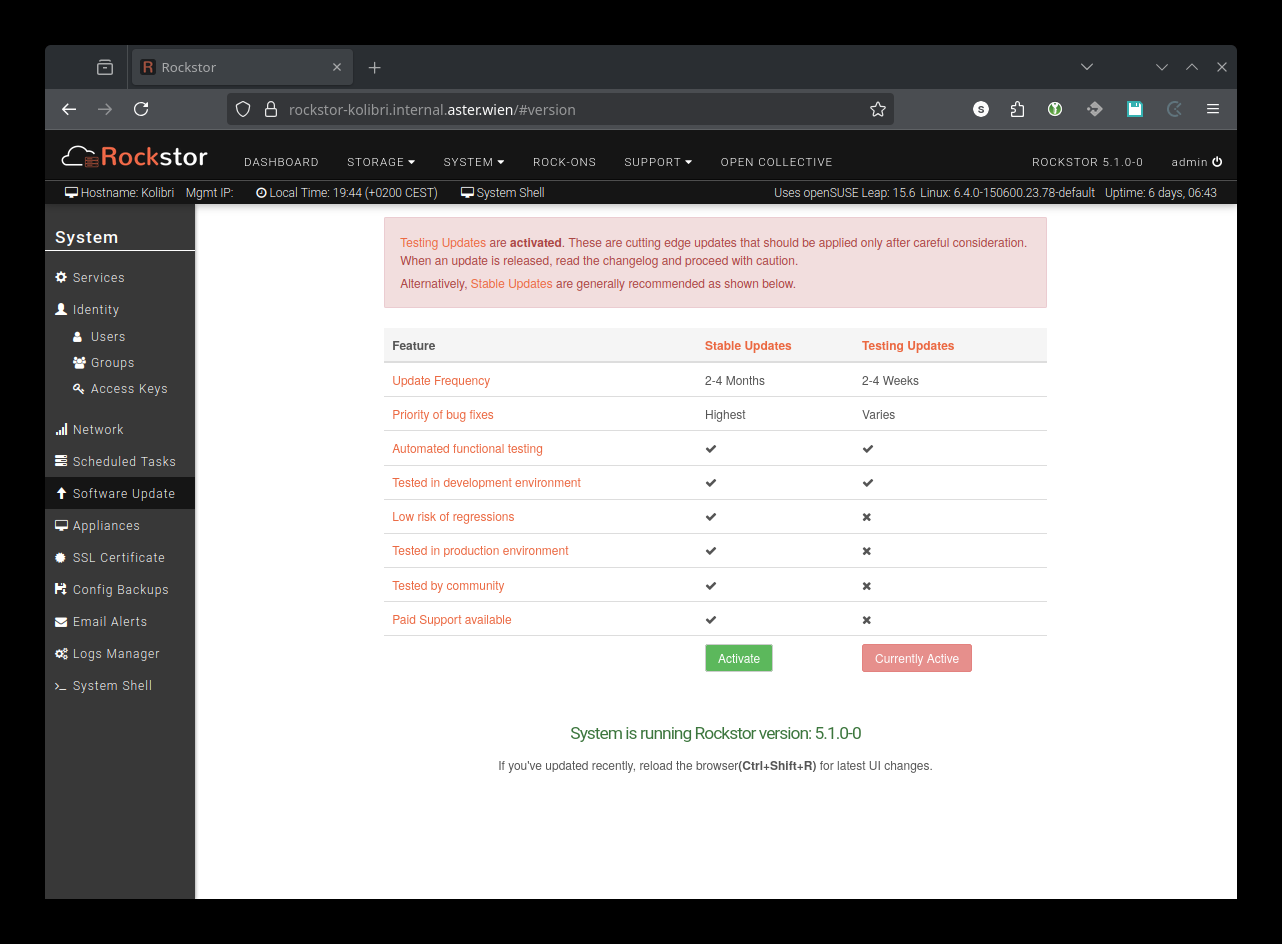


 this might take a very long time (SELinux will go through all the data)